
Know your PTV number
Pendulum slip testing is one of the most widely recognised methods of measuring the slip resistance of pedestrian surfaces. The test provides an objective measurement of floor performance and helps organisations understand, manage and reduce slip risk.
It is commonly used during risk assessments, construction handovers, incident investigations and routine safety monitoring.
What is the Pendulum Test?
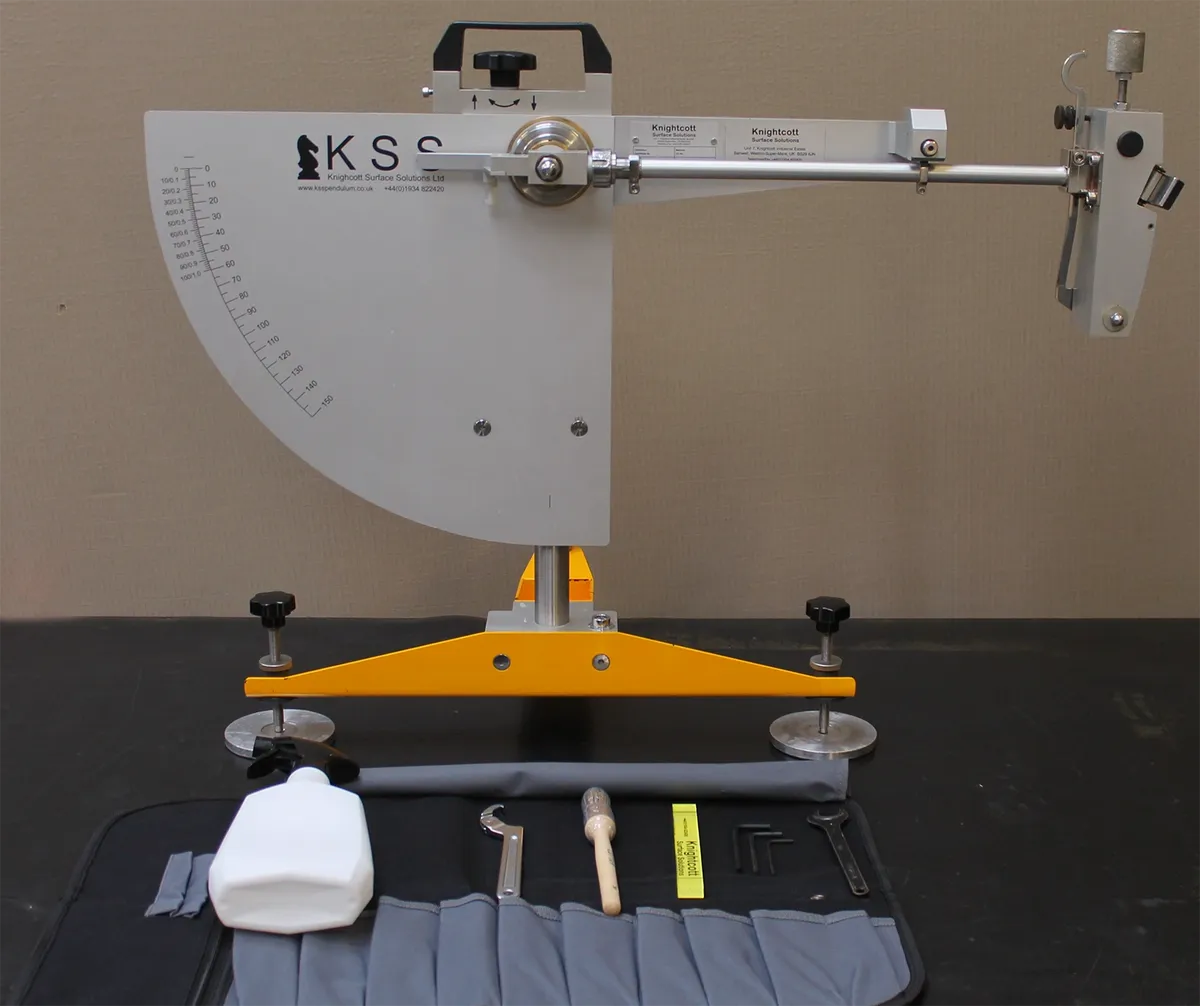
The pendulum test is designed to simulate the action of a person’s heel striking a floor surface during walking. A calibrated pendulum arm fitted with a standardised rubber slider swings across the test surface. As the slider passes over the floor, friction slows the movement of the pendulum.
The amount of friction generated by the surface is recorded as a Pendulum Test Value (PTV).
In simple terms:
Higher PTV = Greater Slip Resistance
Lower PTV = Increased Slip Potential
The test can be carried out on both internal and external pedestrian surfaces.
What standards apply?
Pendulum testing is carried out using recognised standards and industry guidance.
These include:
EN 16165
European Standard for the determination of slip resistance of pedestrian surfaces.
EN 13036-4
European Standard describing the pendulum method for measuring slip resistance. The pendulum test.
UK Slip Resistance Group (UKSRG) guidelines
Widely recognised guidance for the interpretation of Pendulum Test Values and slip potential.
These standards and guidance documents provide a consistent and recognised approach to assessing pedestrian slip resistance.

What Happens during a site visit?
Testing is normally completed on-site with minimal disruption to operations.
Step 1 – Initial assessment.
The areas to be tested are reviewed and representative test locations are identified. Consideration will be given to:
- Surface type
- Usage patterns
- Pedestrian traffic
- Wet and dry conditions
- Areas of concern identified by the client
Step 2 – Equipment preparation.
The pendulum is assembled, checked and verified prior to testing.
Step 3 – Surface testing.
Testing can be undertaken in dry and wet conditions
Step 4 – Analysis of results.
The readings are reviewed to determine the Pendulum Test Value (PTV).
Step 5 – Reporting.
A report is prepared and issued to the client. Reports are designed to be clear and understandable for both technical and non-technical audiences.
Understanding your Pendulum Test Value (PTV) result
The Health and Safety Authority (HSA) and industry guidance classify slip potential as follows:
For most pedestrian surfaces, a wet PTV of 36 or above is generally considered to represent a low slip potential.
Know your PTV number
Understanding your PTV helps you:
- Assess floor performance
- Identify areas of concern
- Support risk assessments
- Prioritise maintenance
- Demonstrate due diligence
- Monitor performance over time
Why choose independent testing?
- Slip Risk provides independent slip resistance testing throughout Ireland.
- We do not supply flooring products, anti-slip coatings or treatment systems.
- Our role is to provide objective measurement, clear reporting and practical recommendations to help clients make informed decisions regarding floor safety.
Need slip resistance testing?
Whether you require a one-off assessment, construction handover testing, incident investigation or ongoing monitoring programme, Slip Risk can help. Contact us today to discuss your requirements.